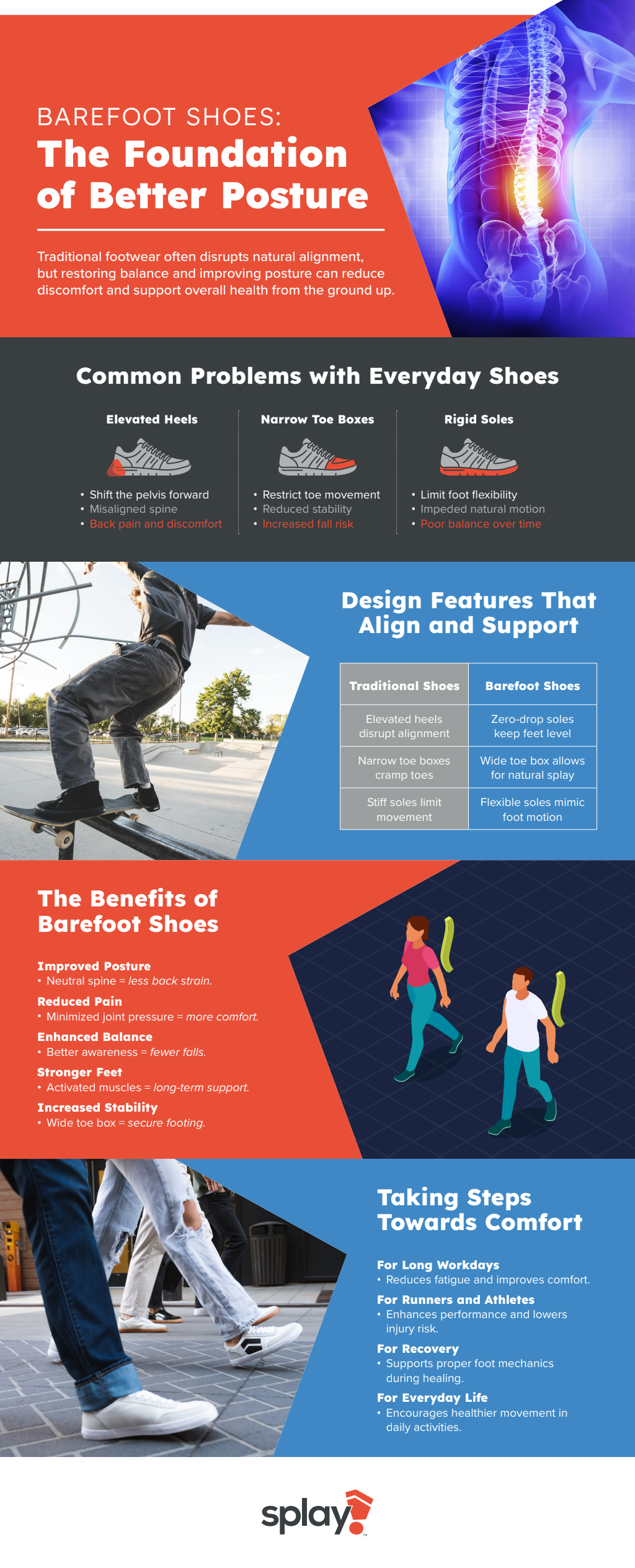
Modern footwear often focuses more on fashion or cushioning than functionality. For many busy moms juggling housework, errands, and childcare, foot health is usually an afterthought. However, poor posture and balance can stem directly from the kind of shoes you wear each day. Making a simple switch to more natural footwear options could have a lasting impact on your mobility, strength, and comfort.
Why Conventional Shoes May Hold You Back
Traditional shoes are built with elevated heels, rigid soles, and excessive arch support. While these features might feel comfortable at first, they can actually restrict foot movement and weaken the muscles that stabilize your lower body. Over time, this can lead to poor alignment and an overreliance on external support. As a result, many people develop postural habits that put unnecessary strain on the knees, hips, and back.
When the foot loses its ability to move freely and absorb impact, the entire body must compensate. This often results in slouched shoulders, uneven hips, and a forward-leaning head position. These imbalances can contribute to fatigue, tension headaches, and even chronic pain.
The Barefoot Alternative
Barefoot shoes offer a more natural experience that allows your feet to function the way they were intended. With a wide toe box, zero heel elevation, and flexible soles, they promote better toe splay and full foot engagement. These features encourage proper alignment from the ground up. When your feet are allowed to move and grip the surface beneath you, your body instinctively adjusts into a more neutral and balanced posture.
This change often becomes apparent quickly. Many users report improved stability during daily activities like walking, lifting kids, or playing at the park. Others notice less lower back tension and a more grounded stance throughout the day. While barefoot shoes are not a cure-all, they provide a foundational support system that helps your muscles and joints work together more efficiently.
What to Expect During the Transition
Shifting to barefoot shoes does require a period of adjustment. Your feet, calves, and lower legs may initially feel sore as they begin to re-engage muscles that have been underused. To reduce strain, it’s important to start slowly and increase your wear time gradually. Begin with short walks or light household activities and allow your body time to adapt.
It can also be helpful to stretch and strengthen the foot and ankle muscles during the transition. Simple exercises like toe spreads or heel raises can build resilience and minimize discomfort. As your feet become stronger, you may notice a more confident gait and a decrease in daily aches and pains.
Improving your balance and posture does not always require elaborate fitness routines or expensive gear. Sometimes, the answer lies in something as basic as what you wear on your feet. Whether you are running errands or chasing toddlers, barefoot shoes support a more natural and efficient way of moving. Over time, they can become a simple yet powerful tool for maintaining comfort, strength, and energy throughout the day. Check out the infographic below to learn more.