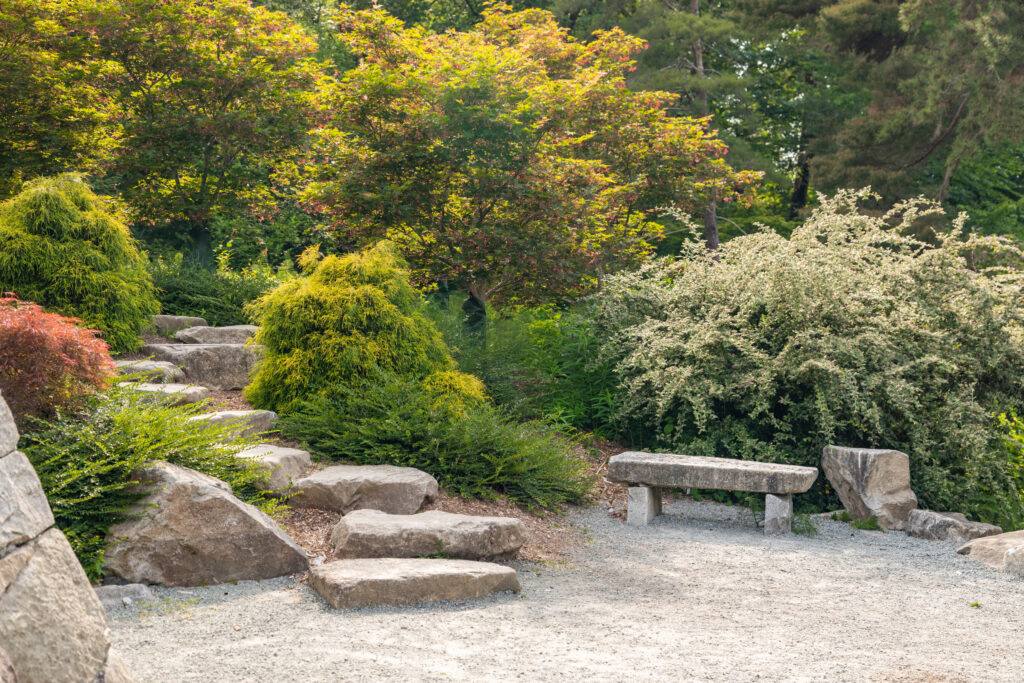
The idea of outdoor rooms has become increasingly popular in recent years, but the concept itself is far from new. Long before modern terminology took hold, gardens were shaped as a sequence of spaces, each with its own mood, purpose and sense of enclosure. When designed well, these zones feel intuitive rather than imposed, guiding movement through the landscape without the need for obvious boundaries.
Creating outdoor rooms that feel natural relies less on bold gestures and more on careful planning. It is about understanding how people use space, how the garden connects to the house, and how subtle shifts in structure and planting can define areas without fragmenting the whole.
Thinking in Zones, Not Features
A common mistake in garden landscaping is to focus on individual features rather than the relationships between them. Patios, lawns, fire pits and seating areas are often designed in isolation, which can leave the garden feeling disjointed or overly busy.
A more considered approach begins with zoning. Each outdoor room should have a clear purpose, whether that is dining, relaxation, play or quiet retreat. Once these uses are defined, the garden can be shaped to support them through proportion, position and flow.
Importantly, zones do not need to be rigidly separated. The most successful outdoor rooms feel connected, with gentle transitions that encourage movement rather than interrupt it.
The Role of Structure
Structure is what gives outdoor rooms their clarity. Hard landscape elements such as terraces, paths, walls and steps help define space and establish hierarchy. These elements provide visual cues that signal a change in use without the need for physical barriers.
For example, a dining terrace might be defined by a change in level or material, while a quieter seating area could be set slightly apart using planting and enclosure. When structure is handled with restraint, it allows planting to soften edges and bring cohesion to the overall design.
Strong structure also ensures that the garden works year round. Even when planting dies back in winter, the underlying framework maintains order and legibility.
Enclosure Without Confinement
A sense of enclosure is essential for outdoor rooms to feel comfortable. People are naturally drawn to spaces that offer some protection, whether from wind, noise or overlooking. However, enclosure does not need to mean solid walls or heavy fencing.
Planting plays a vital role here. Hedges, shrubs, pleached trees and tall grasses can all provide screening while remaining visually light. Layering these elements creates depth and allows views to be filtered rather than blocked entirely.
Partial enclosure is often more effective than full containment. Allowing glimpses into neighbouring areas maintains a sense of connection and encourages exploration, while still giving each zone its own identity.
Flow and Movement
The journey through a garden is just as important as the destinations within it. Paths, sightlines and openings between spaces influence how outdoor rooms are experienced.
Rather than direct, linear routes, gentle curves and shifts in alignment can slow movement and create anticipation. A path that reveals spaces gradually helps the garden feel larger and more engaging.
Flow should also reflect daily use. Routes from the house to dining areas or frequently used seating should feel natural and unobstructed, while more secluded zones can be discovered gradually.
Planting as a Spatial Tool
Planting is often thought of in terms of colour and seasonal interest, but it is equally important as a spatial tool. The height, density and texture of planting all influence how a space feels.
Lower planting can define edges without interrupting views, while taller planting creates privacy and enclosure. Repetition of key plants across different zones helps unify the garden, preventing it from feeling fragmented.
A restrained planting palette is particularly effective in gardens with multiple outdoor rooms. By limiting variety and focusing on structure and texture, each space can feel distinct while still belonging to a coherent whole.
Connecting House and Garden
Outdoor rooms work best when they feel like a natural extension of the house. This connection is often established through alignment, materials and proportion. A terrace that echoes internal floor levels or materials helps blur the boundary between inside and out.
As the garden extends away from the house, spaces can gradually become more informal. This transition mirrors how people move through the garden, from social and functional areas near the house to quieter, more reflective spaces further away.
Designing for Real Use
Ultimately, outdoor rooms succeed when they reflect how people actually live. A beautifully designed space that is rarely used has missed its purpose. Comfort, accessibility and practicality should always underpin aesthetic decisions.
Considering sun and shade, shelter from wind, and proximity to the house all influence how often a space will be used. Thoughtful positioning ensures that each outdoor room earns its place within the garden.
When zones are shaped with intention, outdoor rooms feel neither forced nor decorative. They become places to linger, gather and retreat, each contributing to a garden that feels balanced, usable and deeply connected to its setting.