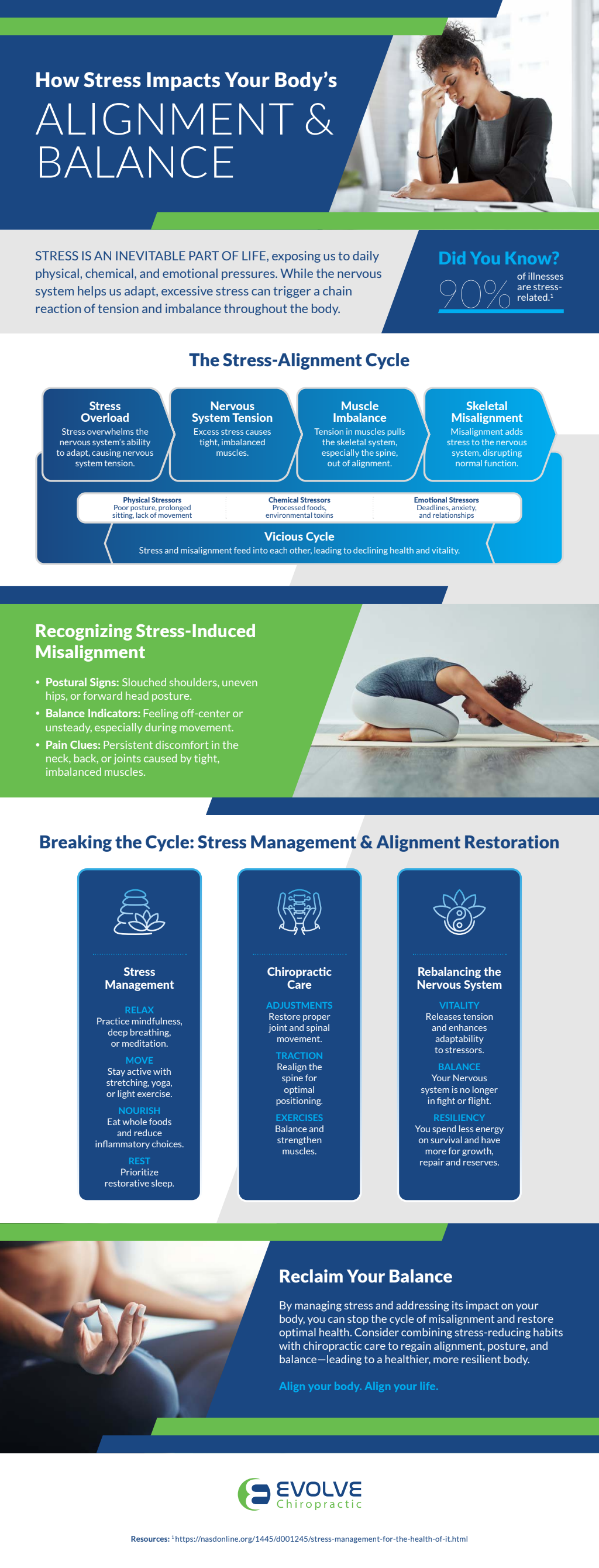
Stress is often considered an emotional or mental experience, but its impact on the physical body is significant and sometimes overlooked. Mothers, especially those juggling work, children, and household responsibilities, may experience chronic stress that disrupts more than just mood and sleep. One of the less visible consequences is the effect stress can have on the body’s alignment and balance.
The Connection Between Stress and Muscle Tension
When the body perceives stress, it activates the sympathetic nervous system, preparing for a “fight or flight” response. This triggers the release of hormones like cortisol and adrenaline, which increase heart rate and muscle tension. While this response is helpful in immediate danger, prolonged stress keeps muscles tight for extended periods.
This continuous tension is often concentrated in the shoulders, neck, jaw, and lower back. Over time, these patterns can pull the body out of its natural alignment. Moms who frequently carry children on one side, nurse in unsupported positions, or sit for long hours with poor posture are especially prone to developing imbalances that begin with muscle tension but evolve into structural shifts.
Stress, Posture, and Misalignment
Emotional stress can directly influence posture. People under stress may unknowingly hunch their shoulders, clench their jaws, or lean forward while sitting. These habits create uneven pressure on the spine and joints. Once posture becomes misaligned, the body starts to compensate, often leading to muscle fatigue, pain, and even reduced mobility.
For example, forward head posture caused by looking down at phones or nursing infants can shift the body’s center of gravity. This can strain the neck and upper back and eventually affect balance. Left uncorrected, this strain may spread to the hips, knees, and feet, increasing the risk of falls or chronic discomfort.
How Balance Is Affected
Balance relies on input from the musculoskeletal system, inner ear, and visual cues. When posture or spinal alignment is compromised, it disrupts the body’s ability to coordinate these inputs effectively. Muscle tightness caused by stress can also interfere with joint mobility, which is critical for adjusting to shifts in movement or terrain. Moms who feel dizzy or unsteady may not realize that their stress levels are contributing to physical instability.
Sleep deprivation and mental fatigue, both common in parenting, further reduce the brain’s ability to process balance cues accurately. This combination of stress-related factors can subtly change how a mother moves through her day, increasing physical strain and the risk of injury.
Supporting Your Body Under Stress
Reducing the physical effects of stress starts with awareness. Practicing gentle stretching, taking regular movement breaks, and using ergonomic supports during daily tasks can help maintain better alignment. Yoga and breathing exercises also encourage muscle relaxation and body awareness.
If chronic pain or imbalance persists, consulting a chiropractor may be beneficial. A chiropractic professional can assess structural alignment and offer non-invasive adjustments to support overall function and comfort.
Daily stress may be unavoidable, but its physical consequences do not have to be. Paying attention to how stress manifests in the body can help mothers move through their routines with less pain and greater stability. Small shifts in posture, movement, and self-care can make a meaningful difference in physical well-being. For more information, look over the infographic below.