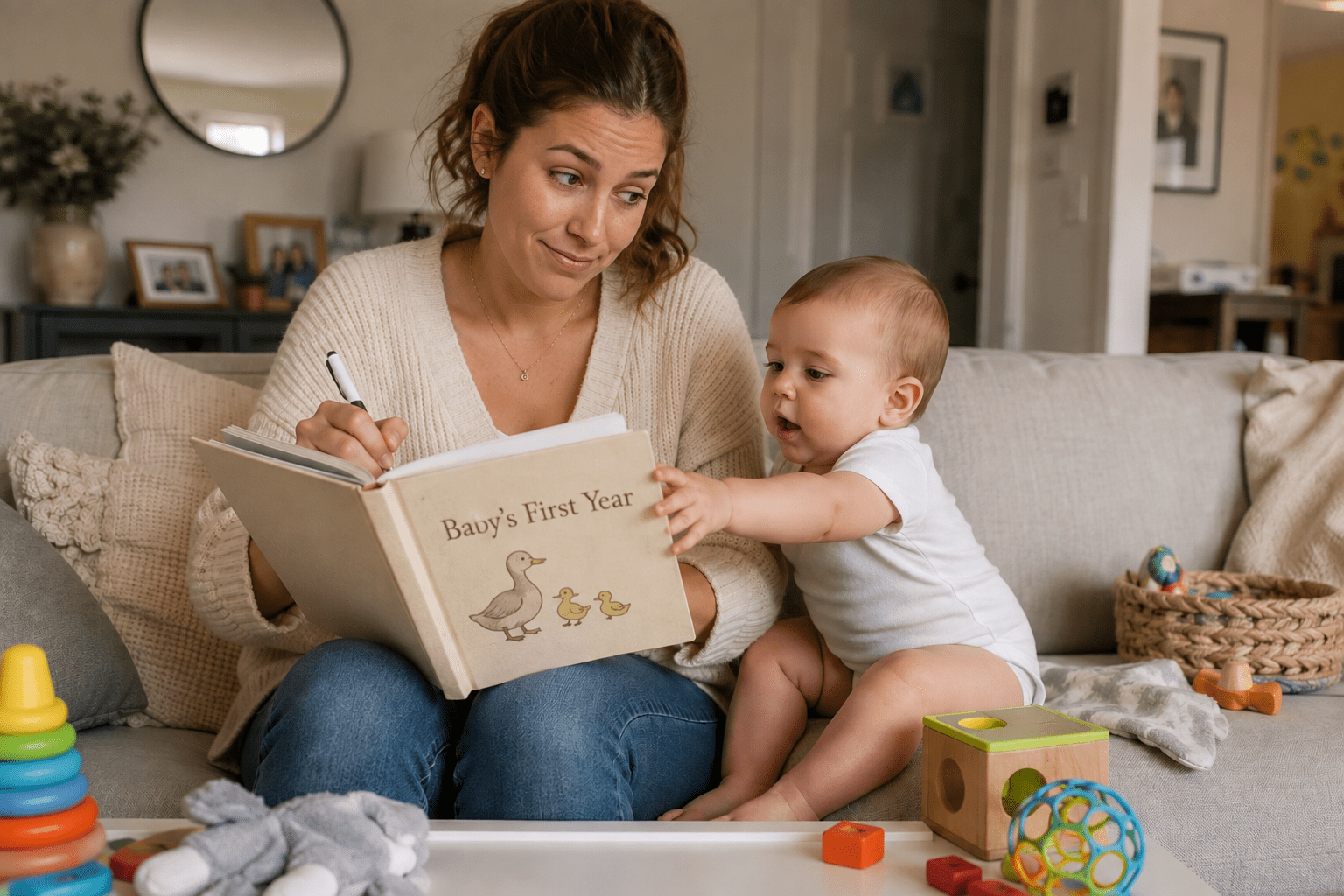
Ask around at any playgroup and you will hear the same confession: the baby book made it to month two. The intentions were sincere. The book was beautiful. And then the reality of caring for a newborn arrived, sleep disappeared, and the book went into a drawer with three pages filled and a hundred blank.
This is one of the most common regrets of early parenthood, and it is worth taking seriously, because a completed first year memory book becomes one of the most treasured objects a family owns. Adults who grew up with one describe the same feeling: there is something irreplaceable about seeing your own beginnings recorded in a parent’s handwriting, written years before they could remember anything themselves.
The difference between an empty baby book and a finished one usually comes down to two things: choosing the right book and using a realistic system. Here is how to get both right, starting before your baby is even born.
Start the Story with Ultrasound Photos
Your child’s book should not begin on their birth date. It should begin with the very first images that ever existed of them: their ultrasound photos.
Beyond the diagnostic scans a doctor orders, elective prenatal ultrasound sessions give parents detailed keepsake images months before delivery. A 2D ultrasound produces the classic black-and-white profile. A 3D ultrasound renders a sculpted, realistic view of the baby’s face, while a 4D ultrasound shows those features in live motion, capturing yawns, stretches, thumb-sucking, and hiccups. HD ultrasound imaging refines the picture further with softer, more lifelike detail. The ideal window for 3D and 4D sessions falls between about 26 and 32 weeks of pregnancy, when babies have enough facial fullness to photograph beautifully but still have room to move.
These sessions produce far more than a single print. Families typically leave a prenatal imaging studio with photo prints, digital images, video clips, and a recording of the baby’s heartbeat, and many studios welcome grandparents and siblings so the first glimpse of the baby becomes a shared family moment. An early gender determination ultrasound, or DNA-based gender testing, adds another milestone that pairs perfectly with a reveal celebration. Every one of these keepsakes belongs in the opening pages of the baby book, where a grainy first profile becomes the true first photo in your child’s story. Just remember that elective ultrasounds complement regular prenatal care and never replace scans ordered by a physician or midwife.
What a Well-Designed First Year Book Includes
The best baby books follow the actual arc of pregnancy and the first year rather than offering a pile of blank pages. Look for these sections:
Before baby arrived. A family tree, the pregnancy story, how the news was announced, and names that were considered. This is the natural home for those 3D and 4D ultrasound pictures and gender reveal photos.
Welcome to the world. Birth date and time, weight and length, the labor and delivery story, who was present, and space for newborn hand and footprints. Record these details within the first weeks, because sleep deprivation erases specifics with surprising speed.
Watching baby grow. Weekly update pages for the first month, when change is fastest, followed by monthly pages through the first birthday. Each month needs only a photo, current stats, and a few lines about new abilities and emerging personality.
Milestone firsts. Dedicated pages for first night home, first bath, first smile, first laugh, first tooth, first foods, first word, first haircut, and first steps, plus a growth chart to fill in after checkups. Firsts arrive on no schedule, so having a page already waiting for each one is what saves them from being forgotten.
Photo pages. Prompted photo spots plus blank overflow pages, so the book flexes to fit however many pictures a family wants to include.
Construction Details That Matter
A first year book will be handled for decades, so build quality is not cosmetic. A cloth or linen cover survives years of small hands far better than paper. A lay-flat binding is essential, since a book that snaps shut while you write with a baby on your lap will not get used. A storage pocket in the back handles items that never fit on a page: hospital bracelets, cards, and extra ultrasound prints. One tip from parents who have filled a book cover to cover: use thin photo prints or photo stickers rather than thick stacked photographs, so a fully loaded book still closes neatly.
The System That Gets the Book Finished
Anchor entries to something recurring, such as filling in the monthly page on the date your baby was born. Keep sessions short, since prompted pages make fifteen minutes enough. Lower the bar, because a book that is mostly complete with honest entries beats an abandoned masterpiece. And print photos as you go rather than facing a year-end project.
Begin during pregnancy, when there is still quiet time to fill in the early pages and tuck in those first ultrasound photos. By the first birthday, you will hold the complete first chapter of your child’s story, from the first flicker on an ultrasound screen to the cake-covered grin, all told in your own hand.