
Teen burnout is becoming more visible in middle and high school students. Many adolescents juggle academic demands, extracurricular activities, social pressures, and family expectations at the same time. While occasional stress can motivate growth, chronic overload without adequate rest can lead to emotional and physical exhaustion. Recognizing burnout early allows parents to respond before patterns take root.
Common Causes of Teen Burnout
Academic pressure remains one of the most significant contributors. Competitive environments, advanced coursework, and expectations for college readiness can create constant performance anxiety. Students in public systems as well as private schools often face similar demands for high grades and leadership roles.
Overscheduling also plays a role. Sports practices, music lessons, tutoring sessions, volunteer hours, and part-time jobs can fill nearly every afternoon and weekend. Without protected downtime, teens may struggle to recharge. Social media adds another layer. Online comparison, pressure to maintain a curated image, and constant notifications can make it difficult to mentally disconnect.
Family expectations, even when well-intended, may increase stress. Teens who feel responsible for meeting adult standards can internalize the belief that their worth depends on achievement. Over time, that mindset can erode motivation and confidence.
Warning Signs to Watch For
Burnout rarely appears overnight. It often develops gradually and shows up in subtle ways. Emotional exhaustion is a key indicator. A teen who once felt excited about school or hobbies may begin to express apathy or irritability. Statements such as “It does not matter” or “I am just tired of everything” deserve attention.
Changes in sleep patterns can also signal trouble. Difficulty falling asleep, frequent waking, or sleeping far more than usual may accompany stress. Physical complaints such as headaches, stomachaches, or frequent colds sometimes reflect prolonged strain on the body.
Academic decline is another warning sign. Missed assignments, lower grades, or lack of engagement in class discussions may indicate that a teen feels overwhelmed rather than incapable. Withdrawal from friends or favorite activities can point to emotional fatigue.
Long-Term Impact on Mental Health and Development
Unaddressed burnout can shape a teen’s long-term relationship with work, learning, and self-worth. Chronic stress during adolescence has been linked to higher rates of anxiety and depression in early adulthood. When teens associate effort with exhaustion or disappointment, they may avoid future challenges.
Self-identity may also be affected. Adolescence is a period of growth and exploration. If a young person’s sense of value centers solely on performance, setbacks can feel devastating. Over time, this can contribute to low self-esteem and fear of failure.
Physical health may suffer as well. Ongoing sleep disruption and elevated stress hormones can weaken immune response and affect concentration. Patterns established in the teen years often carry into college and professional life.
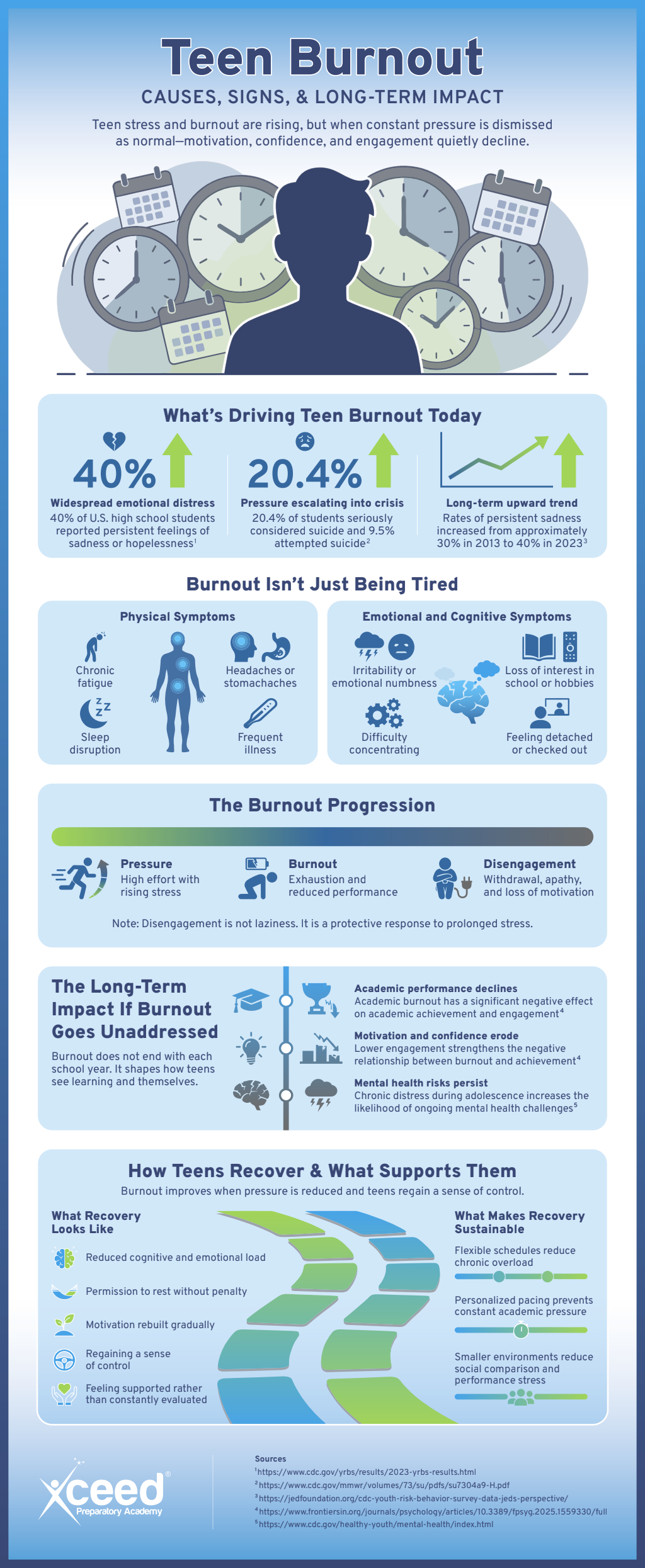
Teen burnout is not a sign of weakness or laziness. It is often the result of sustained pressure without adequate recovery. Parents can help by creating space for open conversation and modeling balanced expectations. Protecting rest, encouraging realistic goals, and reinforcing unconditional support can make a meaningful difference. Look over the infographic below for more information.
Such a positive and well-written post! I liked how smoothly you explained everything, making it enjoyable to read. It’s always great to come across content that is both helpful and inspiring. Your dedication and effort truly reflect in your writing. Keep it up!